What's NeXT?
Article

In 1983 Steve Jobs recruited the CEO of PepsiCo, John Sculley, to work for Apple. Convincing him to come to Apple with a line that would be made famous by the movie Pirates of Silicon Valley.
"Do you want to sell sugar water for the rest of your life or come with me and change the world?"
Fun aside. After portraying Jobs in Pirates of Silicon Valley, Noah Willey appeared on stage at the 1999 New York MacWorld, as Steve Jobs. He delivered the first few minutes of the keynote before the real Steve Jobs took the stage. You can still watch it on YouTube.
After the Macintosh launched, and failed to meet sales expectations, Jobs and Sculley clashed over the best course of action. Sculley wanted to continue focussing on selling the Apple II while Jobs wanted to cut the price of the Macintosh.
In John Sculley's own words in an interview with the BBC in 2012.
I was brought to Apple not because I knew anything about computers - building them - but because the company had to keep the Apple II commercially alive, it was near end of life, for three more years to generate enough cash so that Steve could build the Macintosh and have time to do that and launch the Mac successfully. So during that time Steve and I got along great. When the Macintosh Office was introduced in 1985 and failed Steve went into a very deep funk. He was depressed, and he and I had a major disagreement where he wanted to cut the price of the Macintosh and I wanted to focus on the Apple II because we were a public company.
Jobs saw continuing to focus on the Apple II as the past and wanted to keep Apple focussed on the future, the Macinosh.
When Sculley was due to be away on a trip Jobs went to the board and tried to stage a coup. Ultimately the board sided with Sculley and Jobs was taken off the Macintosh team and, in his words, sent to Siberia.
Siberia was a building accross the street where he had no staff, no projects, and no day-to-day responsibilities. During these months he travelled to Europe, visiting Italy, Sweden, and finally Moscow.
While in Italy he would see the gray-blue sandstone used in Florentine sidewalks that, many years later, he would have imported to use for the floors in Apple stores.
You can read more about The Soviet Adventures Of Steve Jobs in the RadioFreeEurope article.
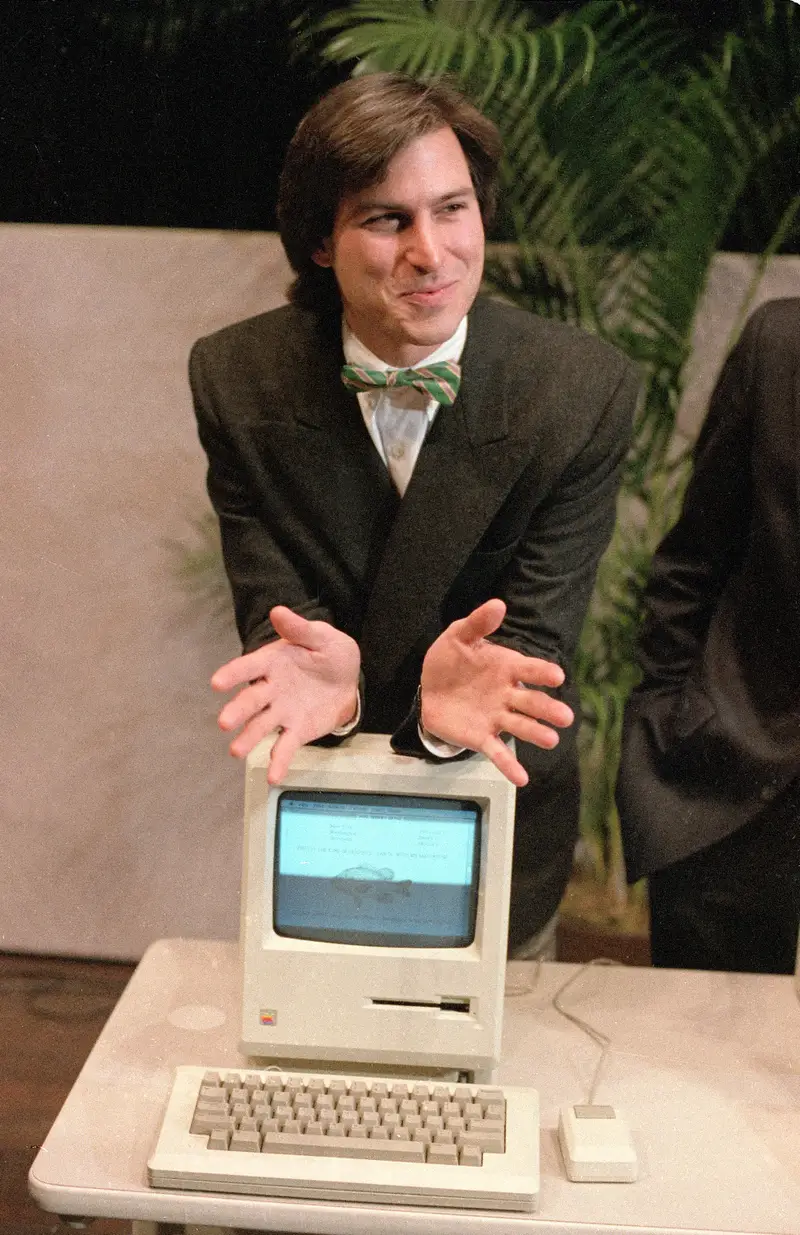
Jobs resigned from Apple on September 16, 1985. His letter of resignation gives some insight into how dissapointed and "perplexed" he was by some board members behaviour. He had informed them a week earlier that he intended to start a new venture and tended his resignation as Chairman of the Board. There was some suggestion that Apple may invest in his new venture but ultimately that wasn't to be and he left Apple.
Upon finding out that Jobs was taking five employees with him to start his new company, Next Inc, Applied filed a lawsuit against him. According to the Los Angeles Times:
Apple Computer filed a $5-million-plus lawsuit Monday against its co-founder and former chairman, Steven P. Jobs, charging that he breached his fiduciary responsibility and that his planned new company would use confidential information.
The legal battle was short-lived and settled out of court in early 1986. As part of the settlement, Jobs agreed not to hire any more Apple employees for a six-month period, and agreed not to directly compete with Apple lest they would sue him again.
Paul Rand
In 1986 Steve Jobs engaged Paul Rand to design the companies brand and logo.
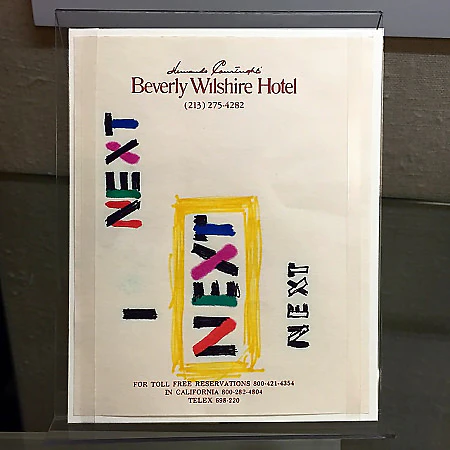
Rand was already a highly acclaimed art director and designer at this time, having designed IBM's brand identity in 1956, and having been inducted into the New York Art Directors Club Hall of Fame in 1972.
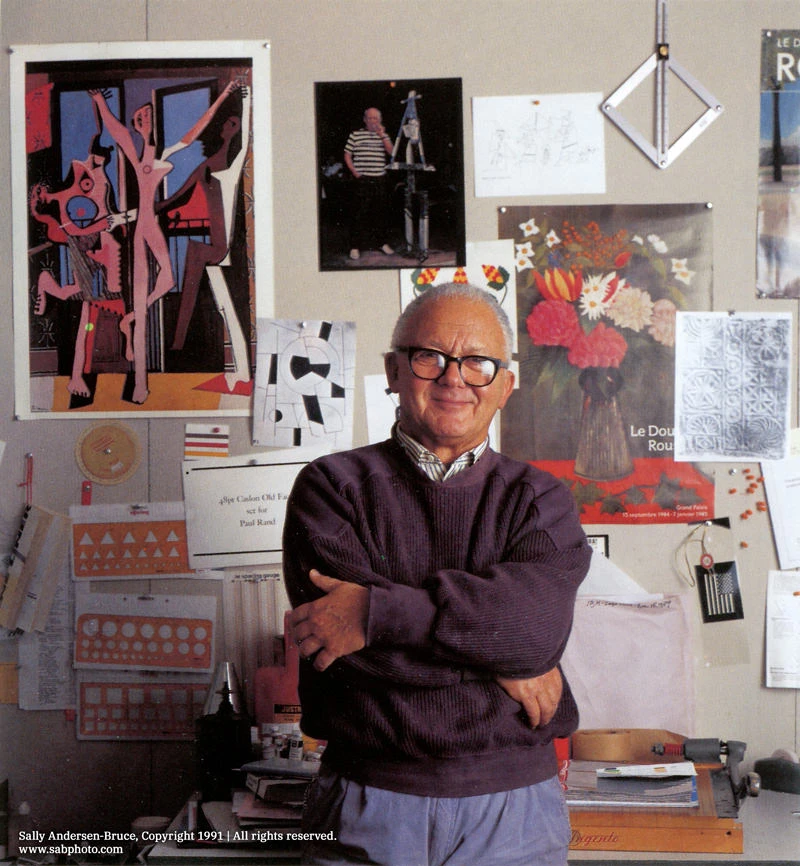
Some of his most well known work include IBM, Westinghouse, UPS, and abc.



He did so many more than this and you can view them all on his website which is fantastic.
1993 Interview
Jobs described Rand as perfecting the exterior of a curmudgen but with a heart of gold.
You go visit him in the house that he designed and had built for himself decades ago and you get a sense that this is a very deep thoughtful person who has tried to express in every part of his life what his principles are and you don't meet so many people like that today
When Jobs asked hime for a few options, Rand told him that he would only provide one.
No, I will solve your problem for you, and you will pay me. And you don't have to use the solution — if you want options, go talk to other people. But I'll solve your problem for you the best way I know how, and you use it or not, that's up to you — you're the client — but you pay me.
Jobs cited the 1981 "Eye-Bee-M" Rebus as his favourite work by Rand. And I have to personally agree; it's absolutely incredible. It manages to bring fun and whimsy to a company that had a very serious and corporate image. It connects the brand with nature and humanity.

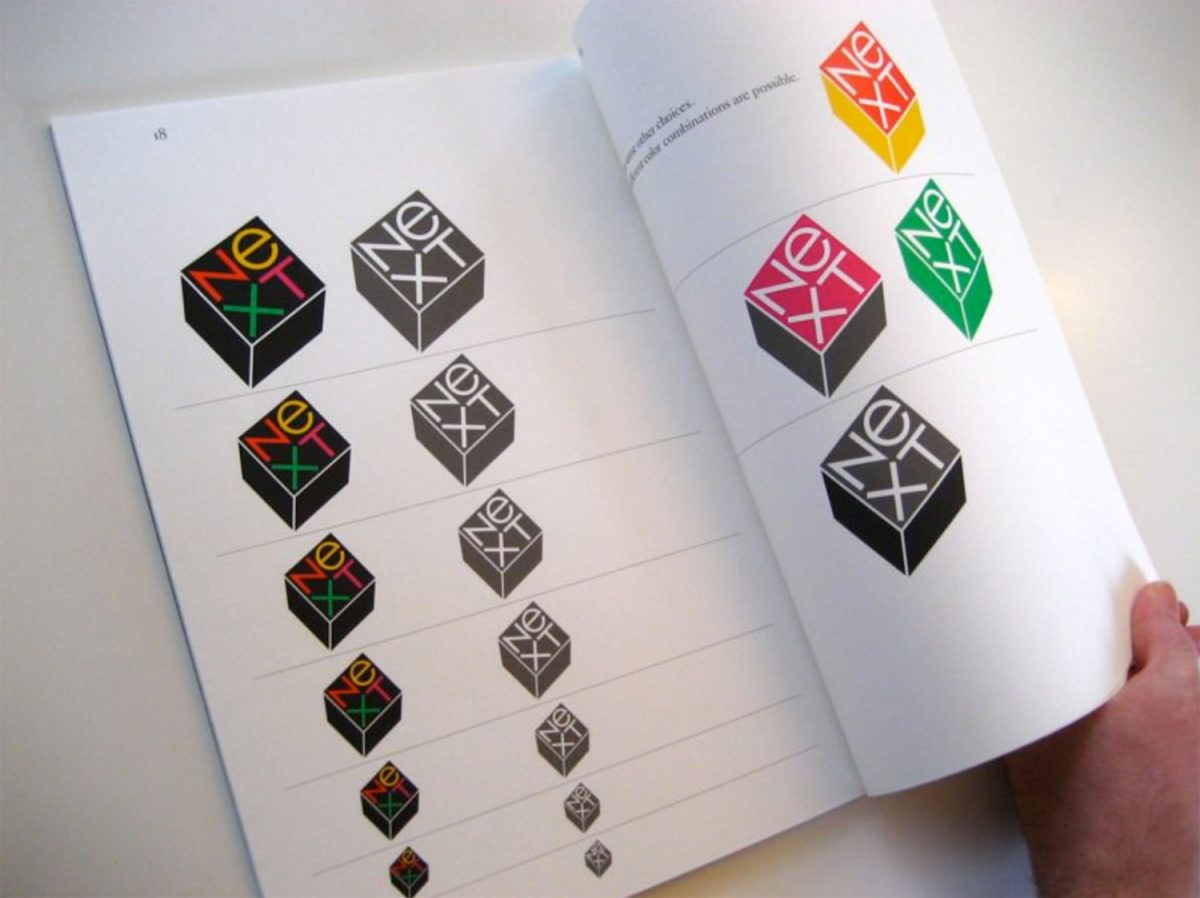
Jobs agreed to pay $100,000 for what he considered to be a 10 year and $100M problem. He didn't just want a logo, he wanted a sort of "jewel", that customers would instantly associate with the company. The NeXT cube logo did this by serving both as a logo and a logomark.
Presentation Book
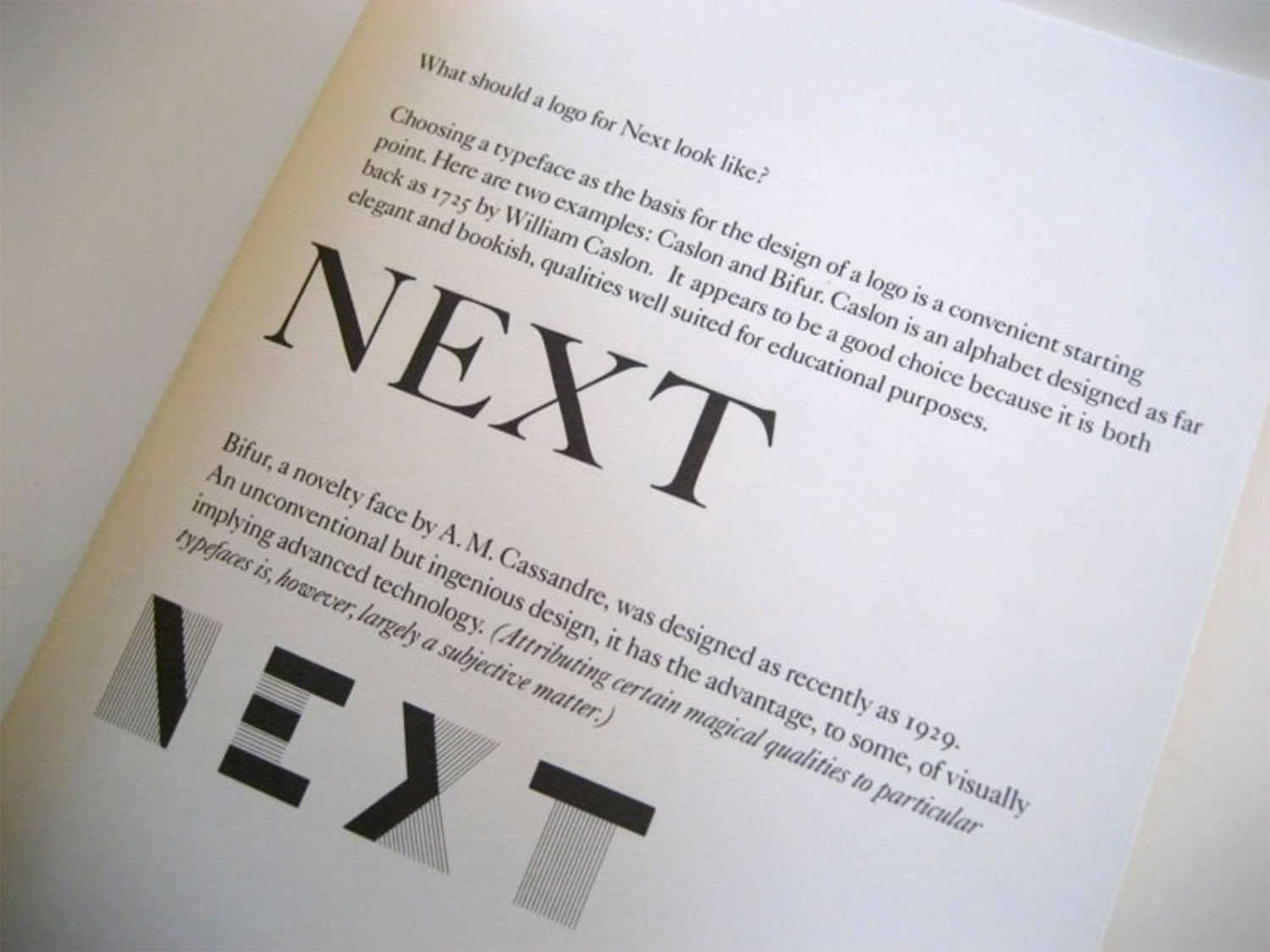
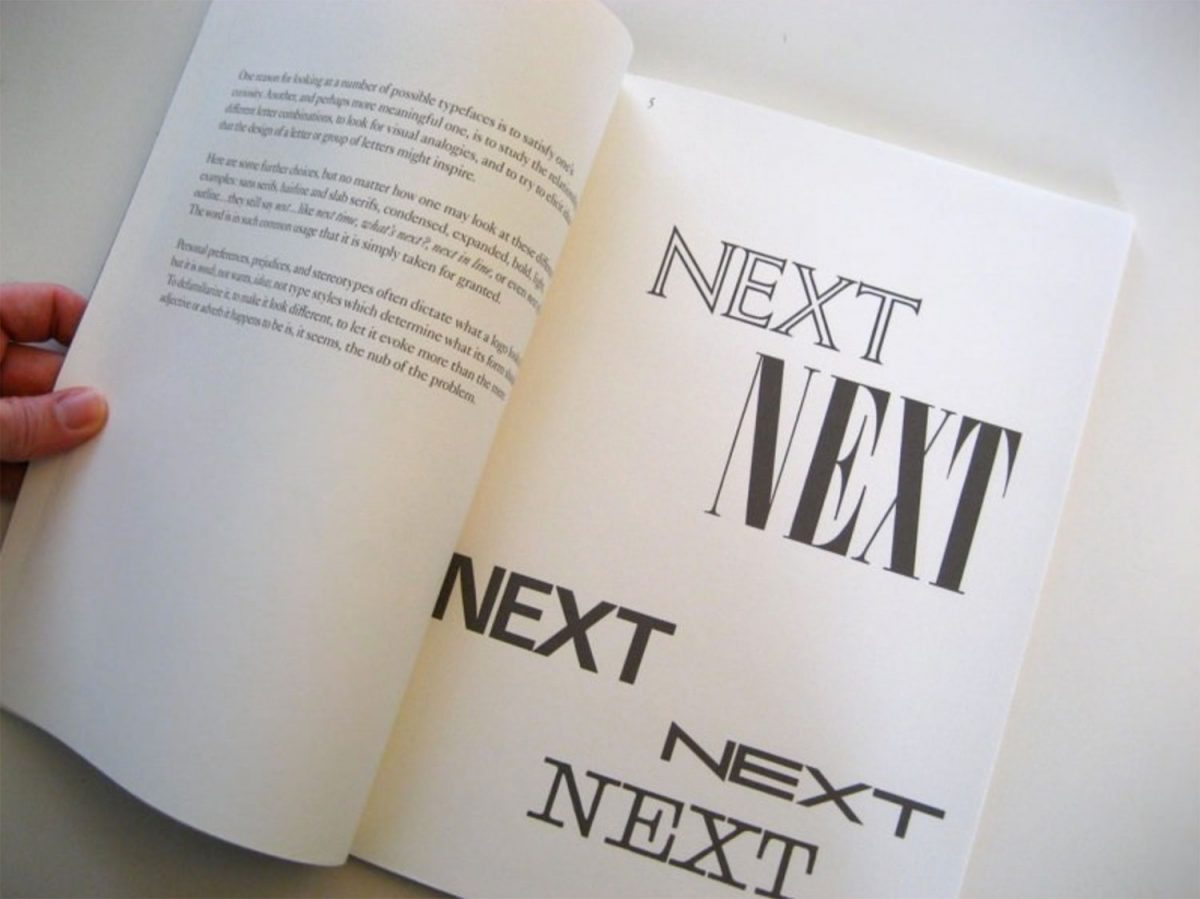
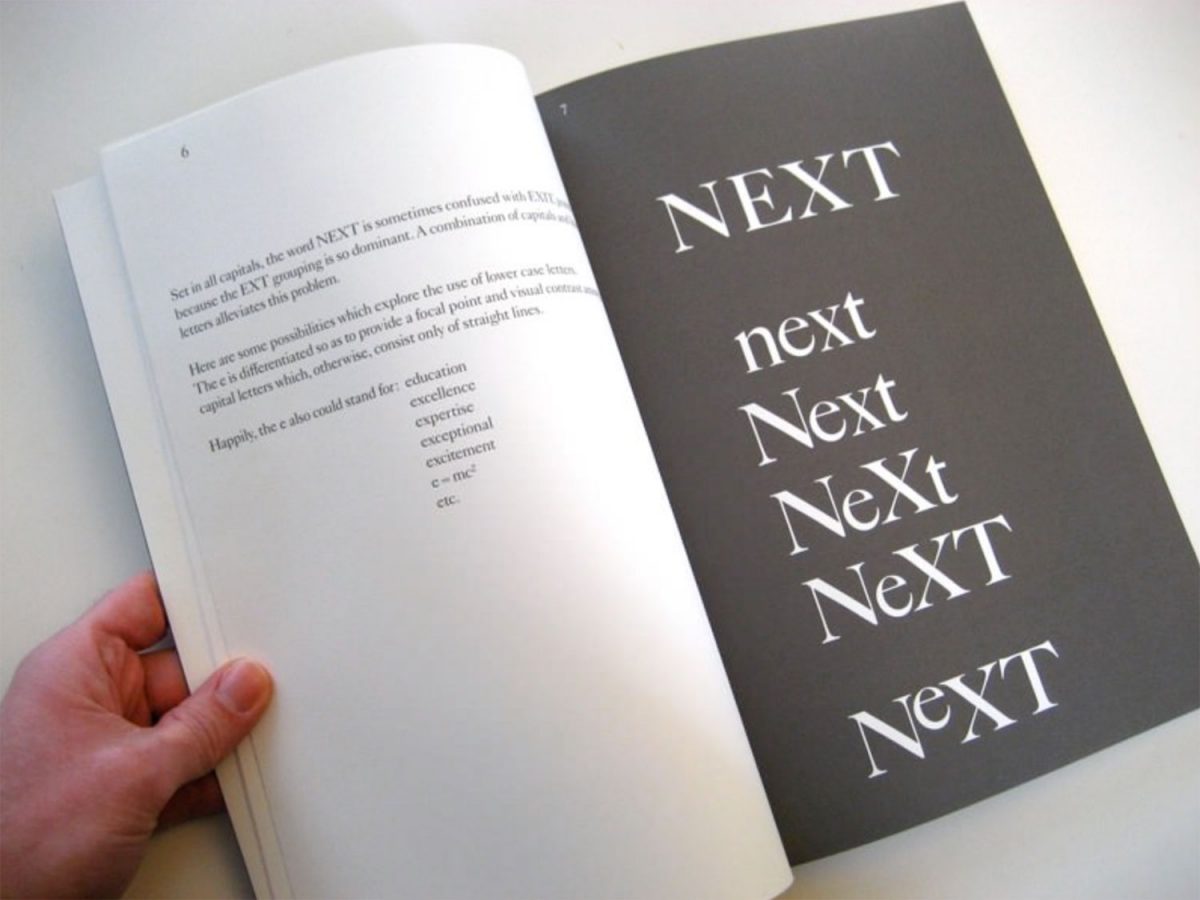
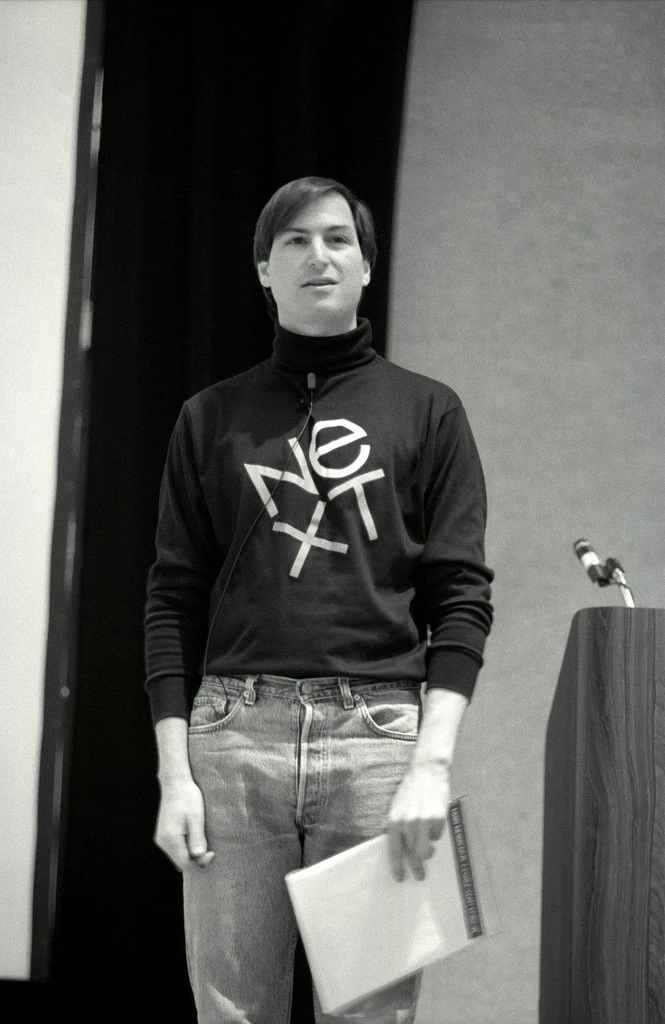
Paul Rand didn't just deliver a logo though, he presented a 100 page book.
I. M. Pei
Jobs hired another famous deigner, architect I. M. Pei, to design the NeXT offices.
Pei was a Chinese-American architect who came to the United States in 1935 to study architecture at the University of Pennsylvania before transferring to the Massachusetts Institute of Technology (MIT).
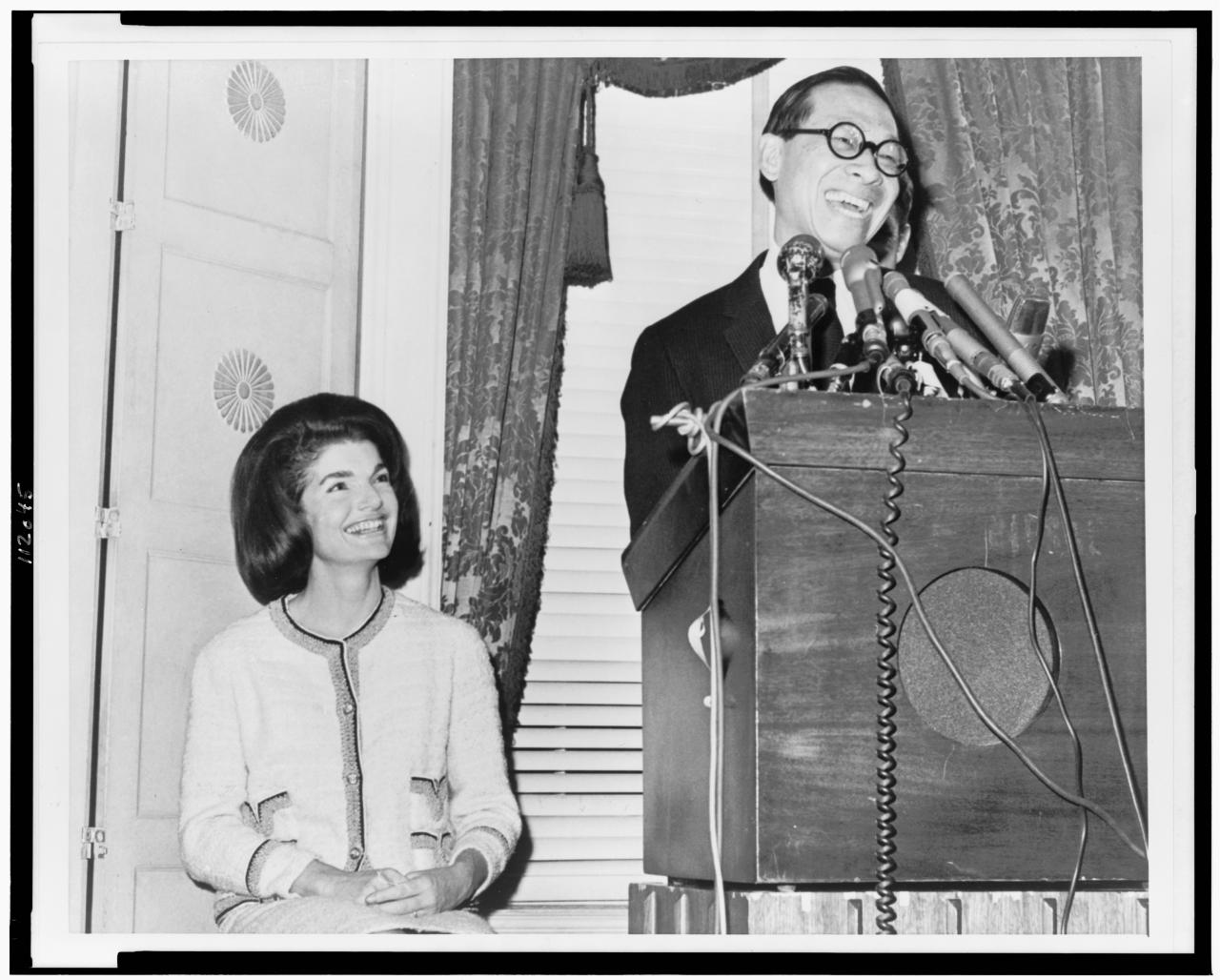
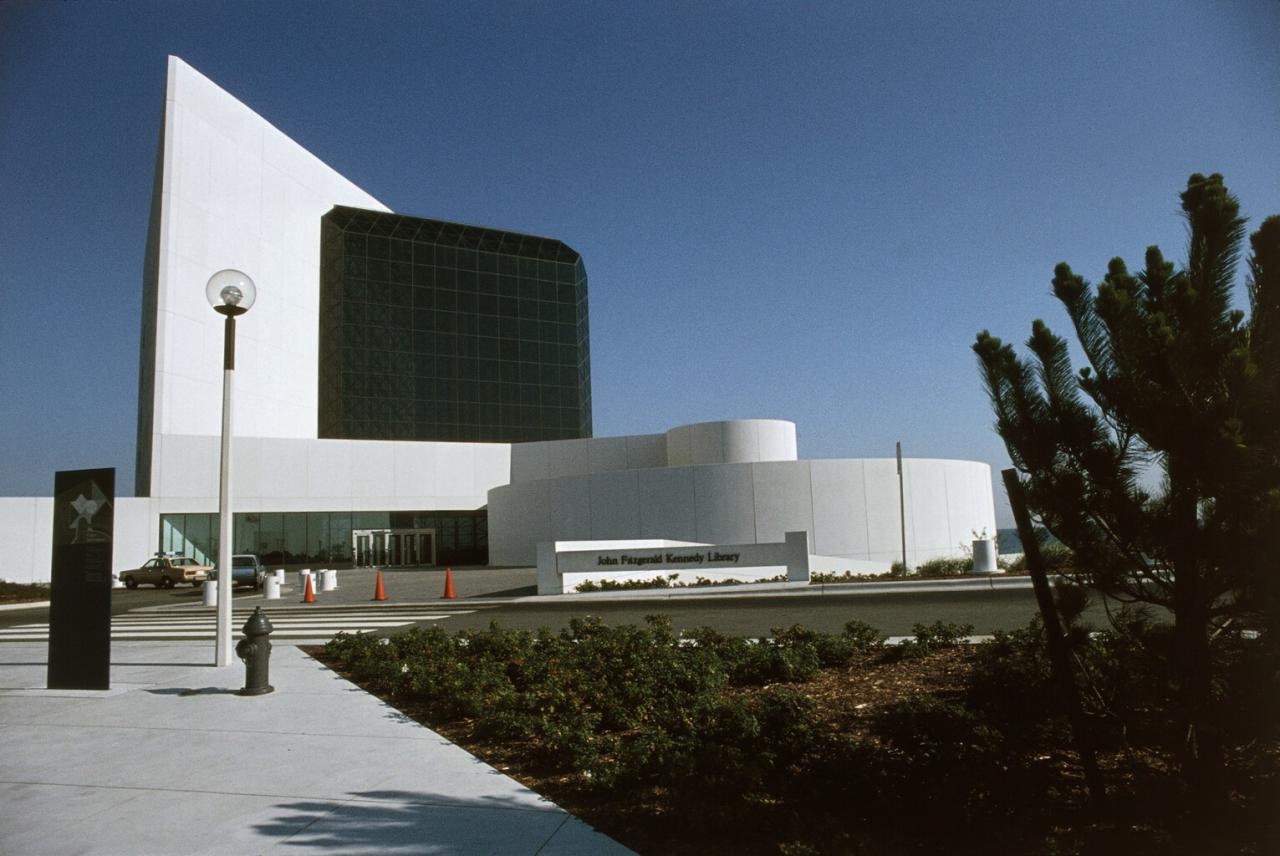
Even though he was realtively unknown at the time, Jackie Kennedy commissioned Pei to design the John F. Kennedy Memorial Library in 1964. (source National Gallery of Art)
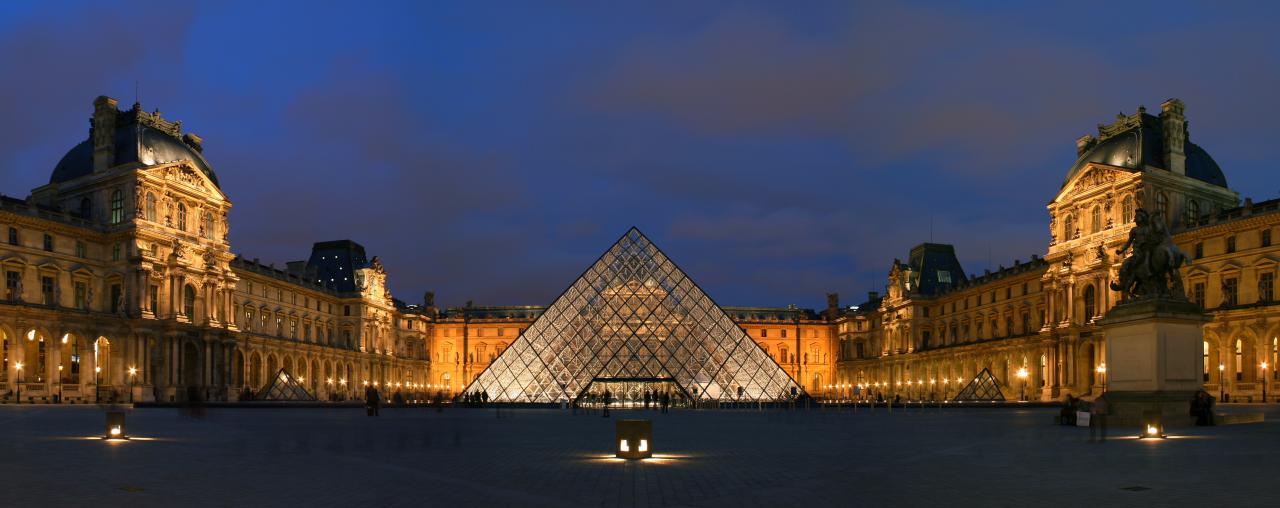
Probably most famously Pei was chosen to redesign the entrance to the Louvre in Paris. In late 1983 and early 1984 he designed the now instantly recognisable glass pyramid.
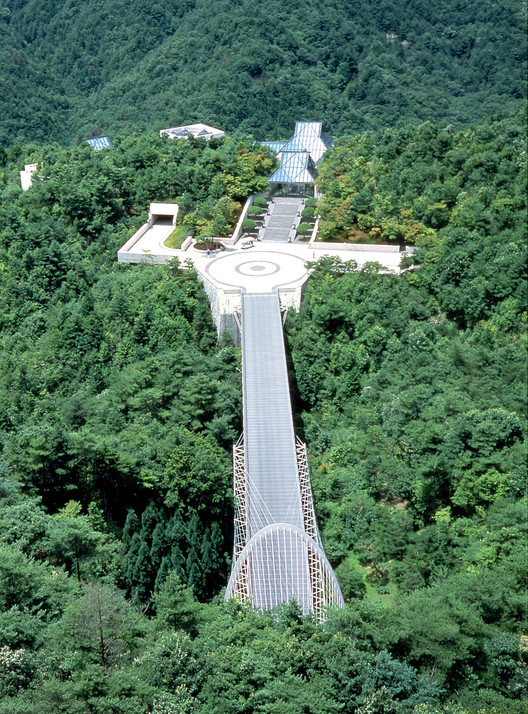
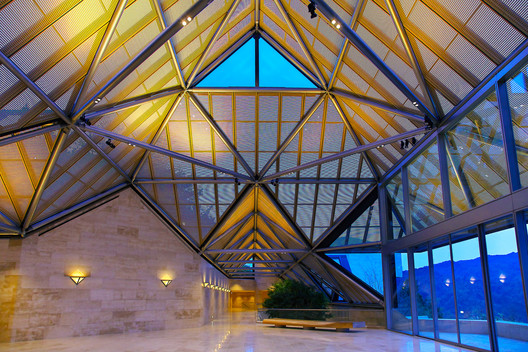
The Miho Museum in Japan has a more extensive list of Pei's achievements, amoung them the design of the museum itself.
Japan's architects in the distant past strove to bring their buildings into harmony with their environment and the surrounding view. Of course, I don't want to be a copycat but do want to respect the thinking of the Japanese people and their culture and traditions. It is not an exaggeration to say that light is the key to architecture.

NeXT Offices
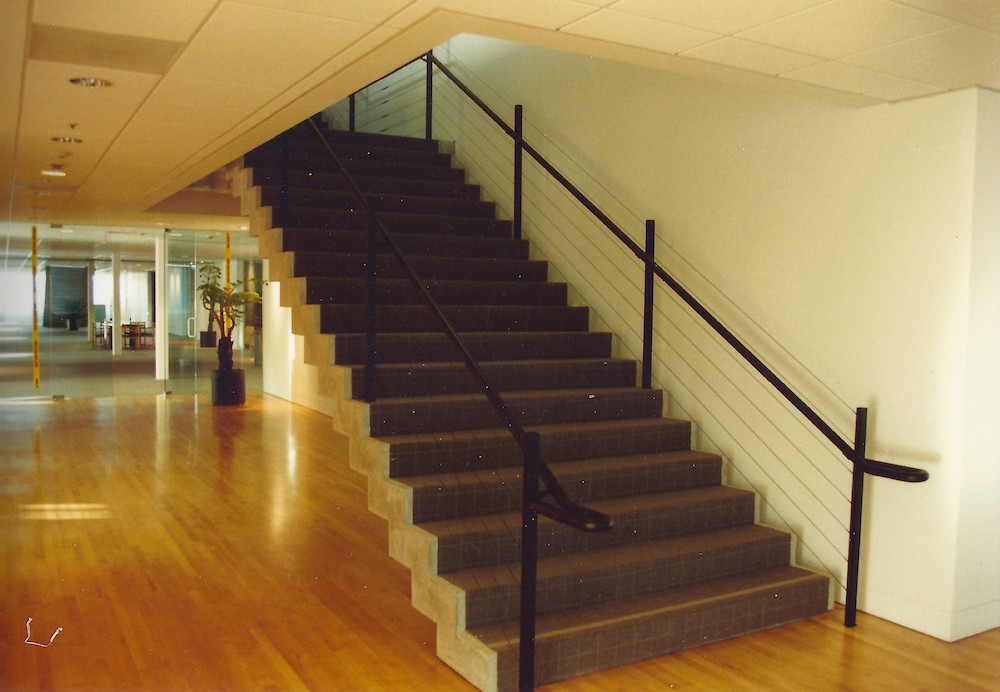
The most striking element that Pei designed for the NeXT offices was the floating staircase. Jobs would later re-use this idea in Apple stores (along with the marble that he saw in the streets of Florence).
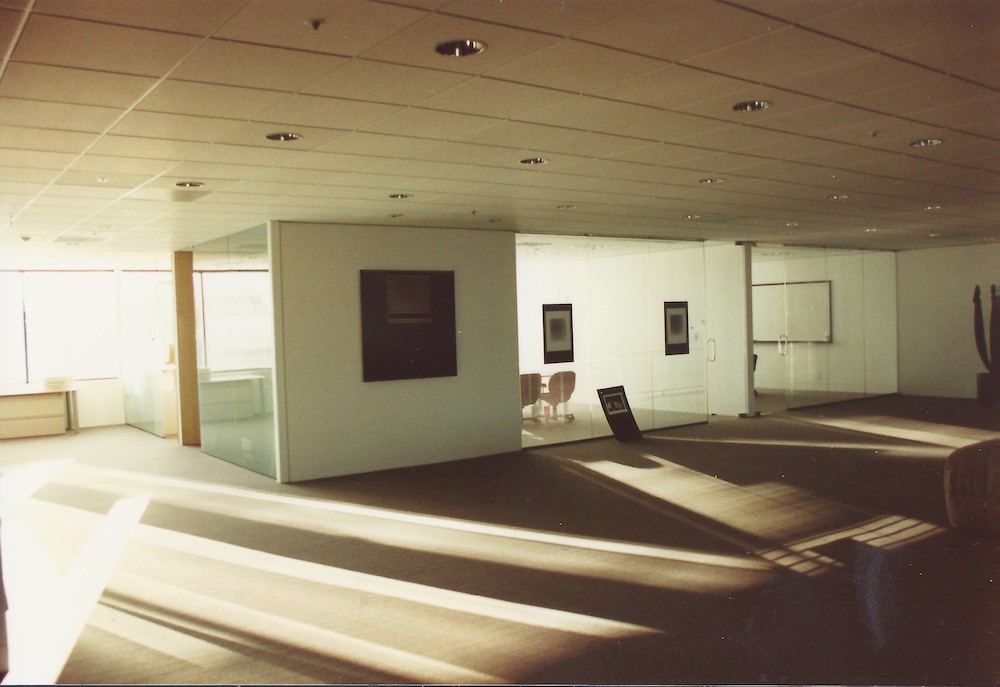
You can also see Pei's influence when it comes to letting light flood the space.
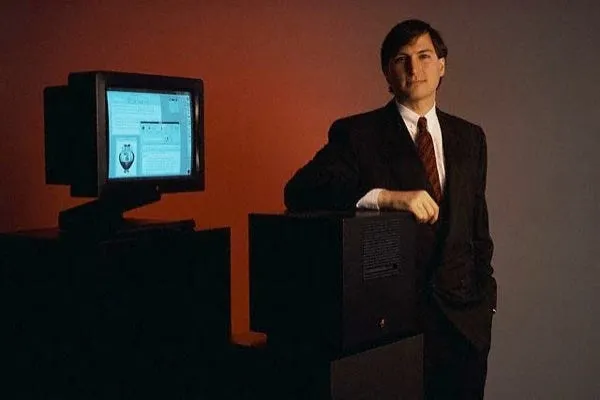
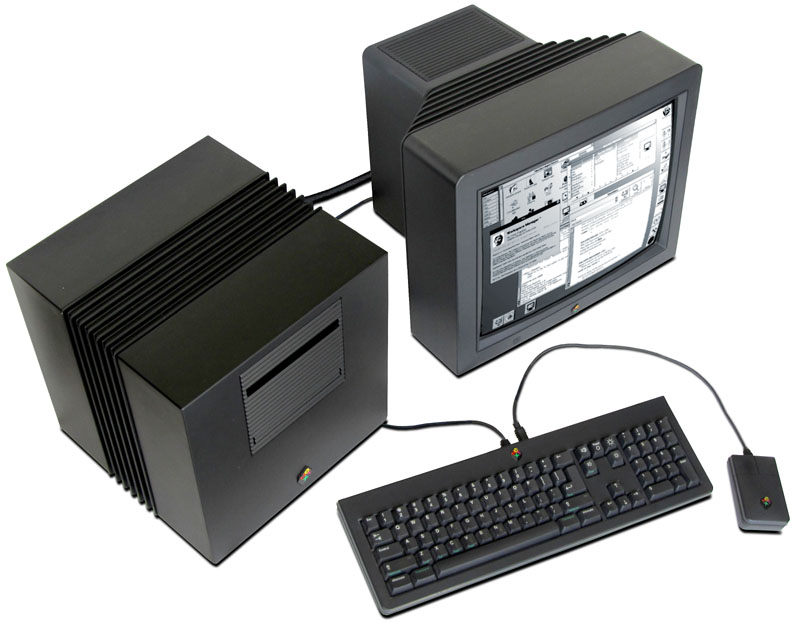
The NeXT Computer was introduced by Steve Jobs on October 12, 1988. It came housed in a 1ft x 1ft x 1ft die-cast magnesium chassis and used a Motorola 68030 processor, ran at 25 MHz, and came with 8MB of RAM as standard. For storage, the NeXT Computer came with a 256MB magneto-optical drive.
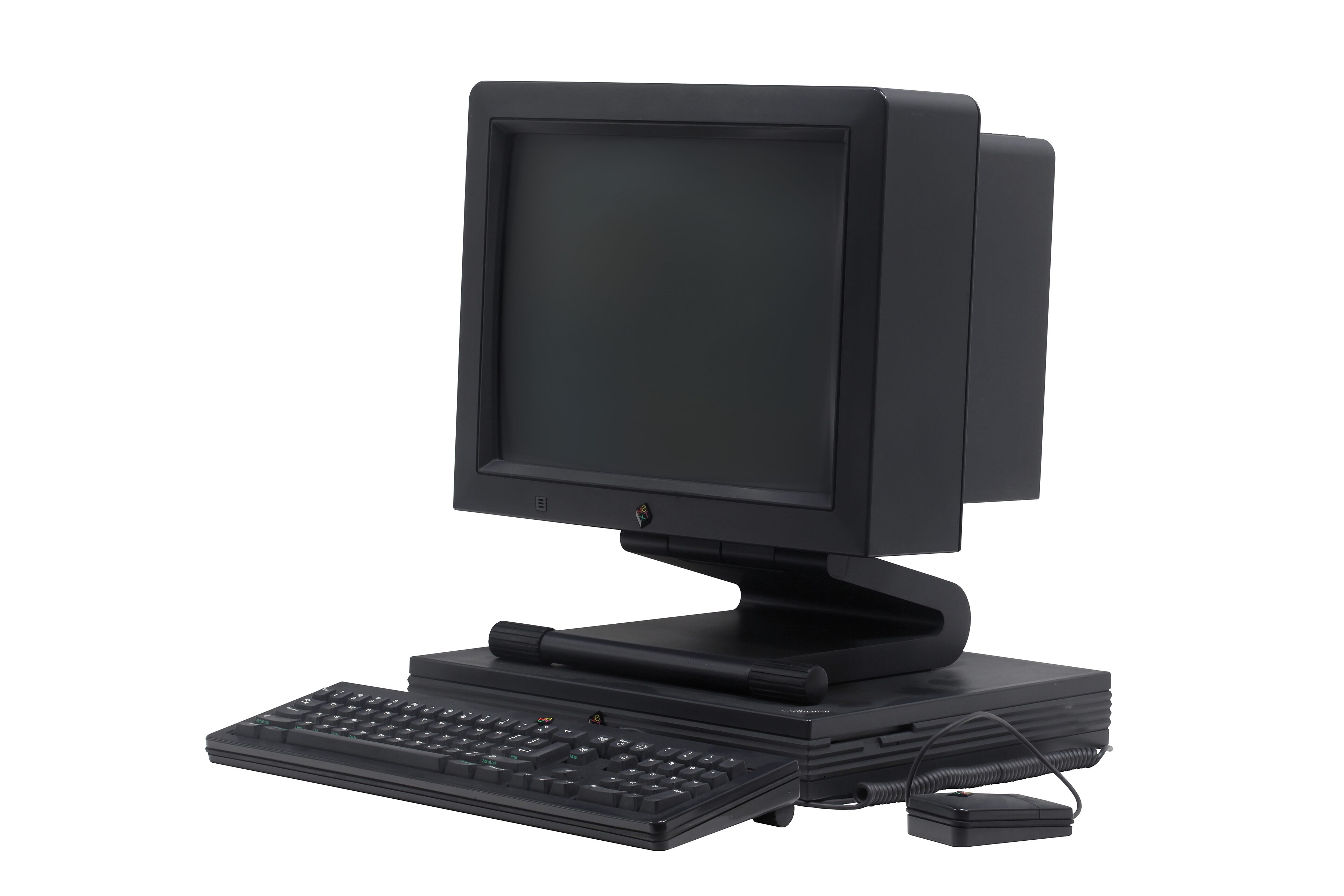
This was replaced by the NeXTcube and the lower cost NeXTstation in 1990.
NeXTSTEP
The NeXTSTEP Operating System was an object-oriented multitasking operating system based on the Mach microkernel and BSD-derived Unix and it ran a custom GUI.
The strap line for NeXTSTEP was: The premier object-oriented software that dramatically simplifies developing and deploying client/server business application.
As well as premiering the shelf and dock on the desktop, NeXTSTEP also utilised the Objective-C programming language.
From the computing history NeXTSTEP page:
NeXTSTEP also originated or innovated a large number of other Graphical User Inteface (GUI) concepts which became common in other operating systems: 3D "chiseled" widgets, large full-color icons, system-wide drag and drop of a wide range of objects beyond file icons, system-wide piped services, real-time scrolling and window dragging, properties dialog boxes called "inspectors", and window modification notices (such as the saved status of a file). The system was among the first general-purpose user interfaces to handle publishing color standards, transparency, sophisticated sound and music processing (through a Motorola 56000 DSP), advanced graphics primitives, internationalization, and modern typography, in a consistent manner across all applications.
Despite receiving praise for their innovations the NeXT harware was expensive and had limited sales primarily amoung Universities and large companies.
Why don't we just become a software company?
During this 1992 MIT talk Steve Jobs was asking this question (at the 18:15 mark).
Jobs explains why they have decided to be a software and a hardware company. His answer was well thought out and convincing, but ultimately he changed that opinion, and not long after, they pivoted to being a software company.
The following year, in February 1993, the New York Times ran this story. After months of speculation, NeXT Inc was leaving the computer harware business, and was going to concerntrate on its Operating System software.
During a phone interview following the announcement Jobs said that:
We understand that we could work really hard for the next few years and emerge as a good second-tier hardware company. But people are telling us that there are just three competitors for the software and we have a chance to be a first-tier software company.
Where the Web was born
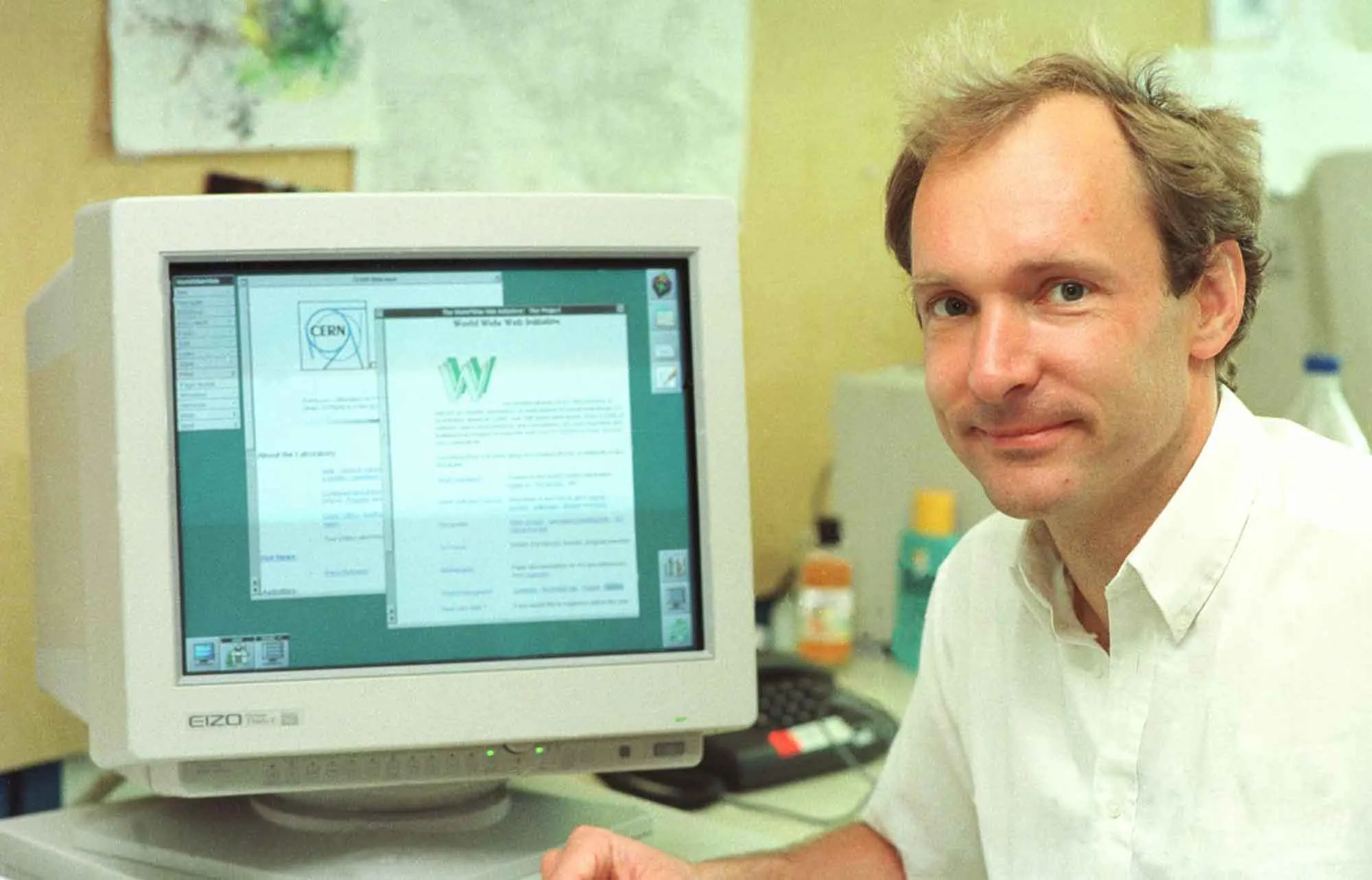
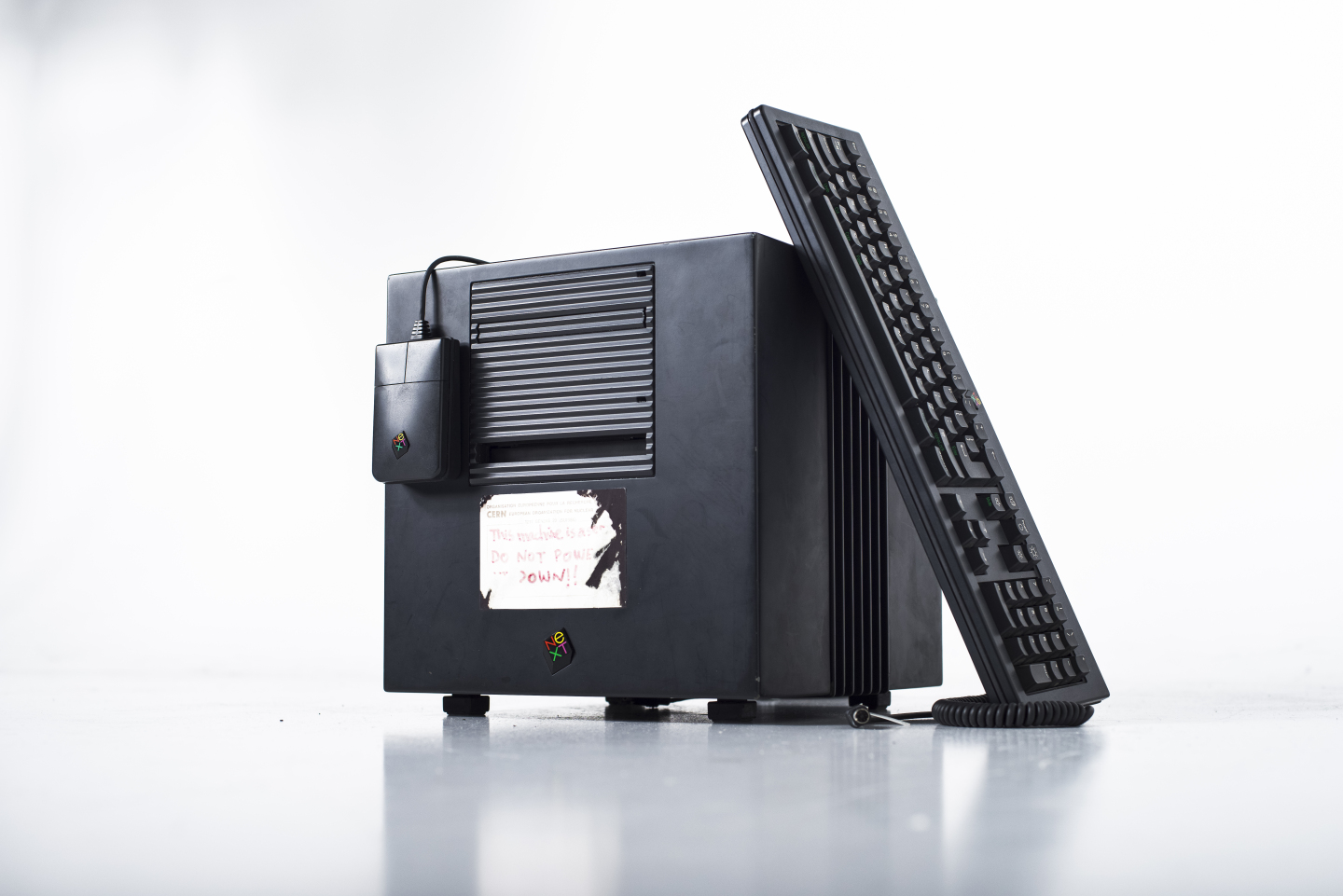
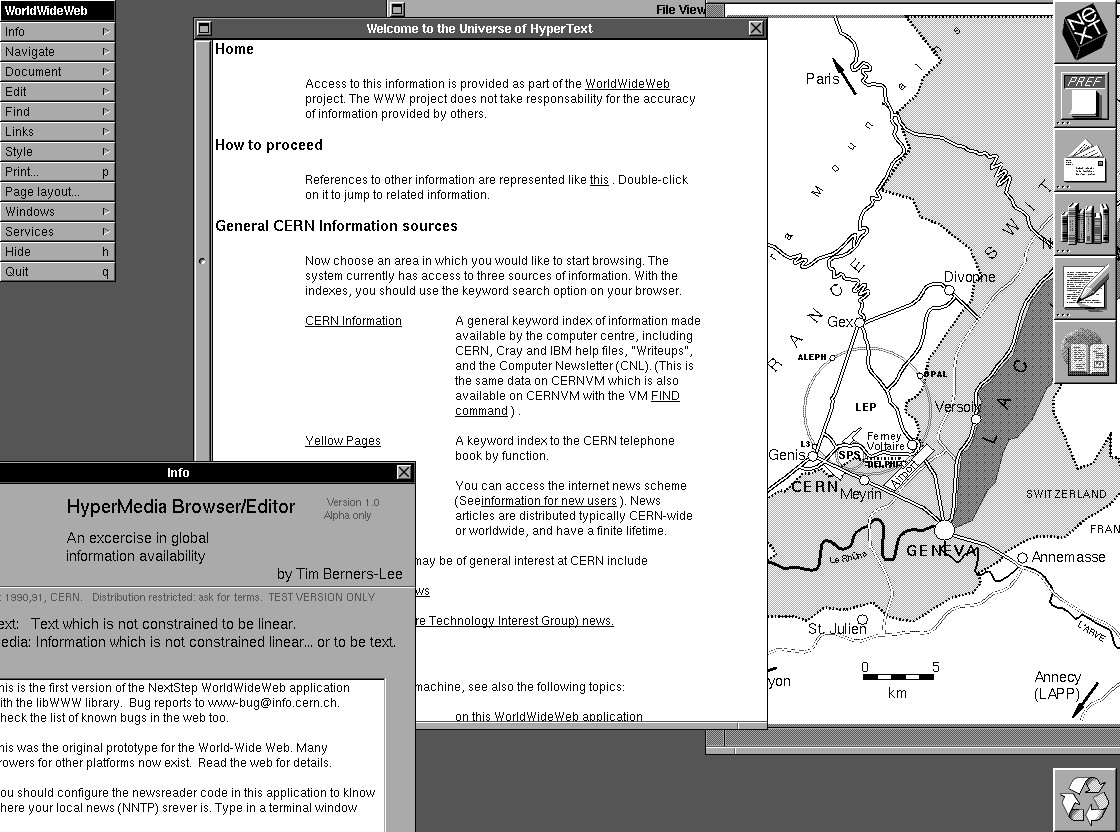
If you're reading this you likely know that the web was created by Tim Berners-Lee. But did you know that the first web server ran on a NeXT computer?
By the end of 1990, Tim Berners-Lee had the first Web server and browser up and running at CERN, demonstrating the ideas behind the proposal. He developed code directly on the NeXT computer hosting the first web server and kept it in his office. To prevent it being accidentally switched off, the computer had a hand-written label in red ink: "This machine is a server. DO NOT POWER IT DOWN!!"
Apple acquires Next, Jobs
That headline is courtesy of this CNET story from December 21, 1996.
Apple will pay about $350 million in cash and stock for the privately held Next to purchase that company's shares and an additional $50 million to cover its debts.
Apple were looking to aquire an Operating System and it came down to NeXT and BeOS.
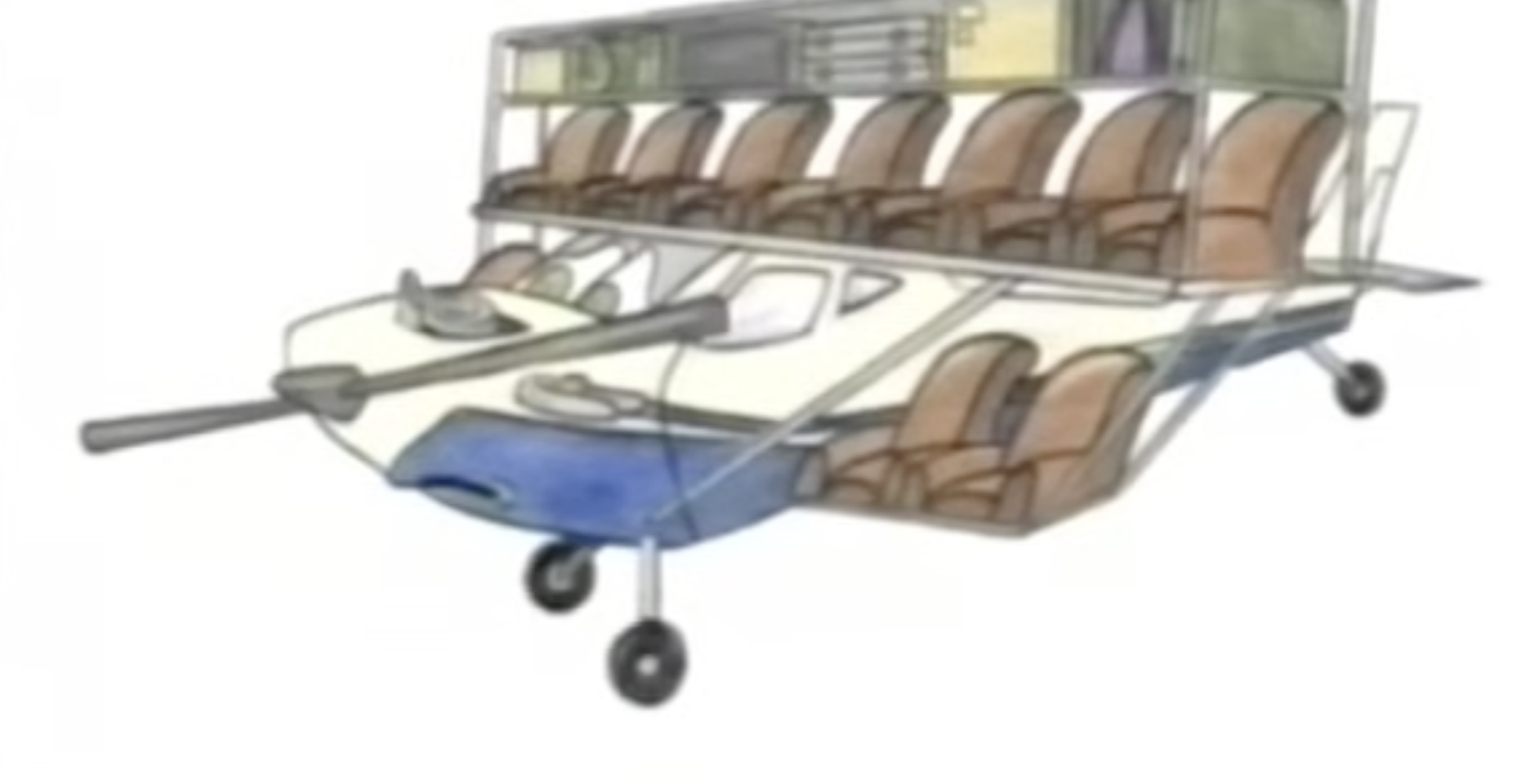
During his keynote at Macworld in January 1997, then CEO Gil Amelio, describes how Mac OS needed to be modernised with an amazing analogy involving a Cessna airplane.
The last slide in Gils presentation talking about the gains of aquiring NeXT simply says this:
You can watch the full Keynote below, Steve Jobs comes out after 7 mins, to a standing ovation.
Steve would become interim CEO in July of 1997 and full time CEO again on January 5th, 2000. Mac OSX (built on the foundation of OpenStep) launched in 2001 and continues to power macOS, iOS, iPadOS, watchOS, tvOS, and visionOS today.